The Non-Surgical Facelift: Rejuvenation Options Without Going Under the Knife
Facial rejuvenation techniques have taken massive leaps forward in the past decade. Earlier, surgical facelifts were pretty much the only way of see…



You’ve spent years perfecting your skincare routine, but suddenly, your cold creams, moisturisers, and serums don’t seem to cut it anymore. As if menopause wasn’t tedious enough, with its hot flushes, headaches, and brain fog, it also affects the skin. This is due to declining oestrogen levels, which have a knock on affect, slowing the production of collagen and reducing your facial fat. Many people notice that their skin becomes drier, slower to repair, and takes on a dull tinge.
Unfortunately, topical products are not enough to counter the hormonal and structural changes that take place during menopause. Changes happen from the inside out, and the best menopause skin treatments need to go deeper than skincare alone. This article looks at the shifts taking place under the surface, and which cosmetic interventions are best suited to address the underlying issues, and make your face glow again.
Oestrogen is a hormone best known for its role in the female reproductive system, but it also plays a key part in skin health, helping to maintain collagen production, elasticity, and hydration. When oestrogen levels drop during menopause, many women experience multiple skin changes at once.
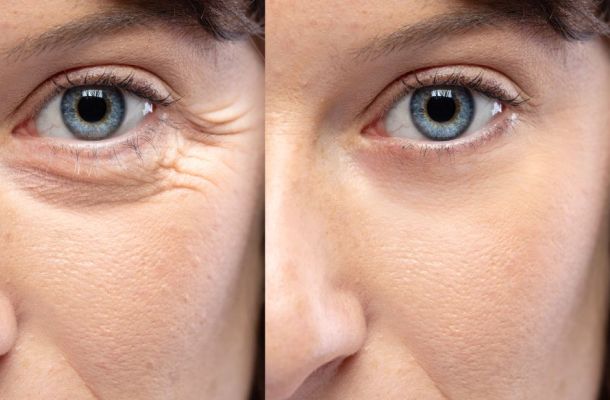
The drop in collagen production causes the skin to become thinner and less able to resist repetitive movement. Fine lines often deepen into permanent wrinkles.
Facial skin loses both elasticity and underlying support. This results in looser contours, sagging, and a “deflated” look, particularly around the cheeks, jawline, and neck.
During menopause, there is a drop in the production of sebum, the skin’s natural oil that keeps it soft and protected. This weakens the skin’s protective layer. Moisture escapes more easily, leaving skin feeling tight, flaky, and more reactive to outside stressors.
Thinning skin combined with collagen loss can give the skin a crinkled appearance, especially around the eyes, mouth, neck, and décolletage.
Slower cell turnover and reduced blood flow leave skin looking dull and uneven. The natural radiance associated with younger skin fades, replaced by a flat or tired appearance.
With all of these changes, many people see an unfamiliar face looking back in the mirror, and start exploring menopause skin treatments in the hope of restoring firmness and glow.
Many women describe menopause skin as if it “ages overnight.” Hormonal shifts affect skin structure and function far faster than normal chronological ageing.
Oestrogen plays a key role in collagen production in women’s skin by stimulating fibroblasts, cells in the skin’s deeper layers that produce important proteins. As oestrogen levels drop, collagen synthesis slows dramatically, and its breakdown accelerates.
Research shows women can lose up to 30% of their skin’s collagen within the first five years after menopause. This sudden loss explains why skin becomes thinner, looser, and more wrinkled in a relatively short time.
Oestrogen plays other roles in skin health, beyond stimulating collagen production. It boosts hydration, supports cell turnover, and improves blood flow. When it declines, the skin can become drier and duller. It gets less good at repairing itself. Reduced blood circulation means less oxygen and fewer nutrients reach the skin, contributing to that flat, tired look many women notice during and after menopause.
Topical skincare has inherent limits, and menopause often pushes the skin beyond them. That’s why many women notice that their skin after menopause suddenly seems unresponsive to products that once worked wonders. Many over-the-counter menopause skin treatments simply cannot penetrate deeply enough to reverse structural decline.
Protecting your body from the outside world is the main role of the skin, your largest organ. And it is good at it. It prevents large, complex molecules from getting in.
What this means for creams and serums is that most active ingredients cannot penetrate to the level where collagen, elastin, and structural repair actually happen. Whatever gold dust is in your cream, it can only do so much, and it can’t replace the proteins that menopause has depleted from within.
Before you rush to throw your skincare products away, note that they can support surface-level processes, such as cell turnover and some collagen stimulation. Retinoids, for example, reduce fine lines and speed up cell turnover. Peptides act as signals, telling surrounding cells to repair themselves.
In short, these products are useful for maintaining the surface level health of your skin, but they aren’t able to address the hormonal changes that affect the structure at a deeper level.
Many products temporarily hydrate, smooth, and plump the surface of the skin. That short-term glow can be reassuring, but it isn’t a sign of in-depth repair. If you don’t help the structural supports of your skin repair themselves, they will continue to weaken, and the effects of surface-level products will dwindle.

Once oestrogen levels drop, the skin’s ability to regenerate, produce collagen, and maintain its internal structure declines sharply. This is where regenerative medicine differs fundamentally from skincare or traditional aesthetic fixes.
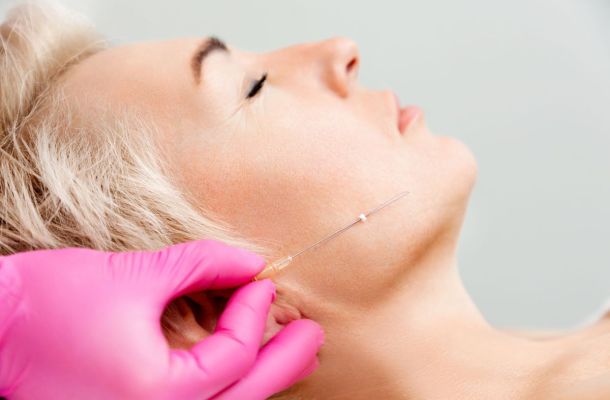
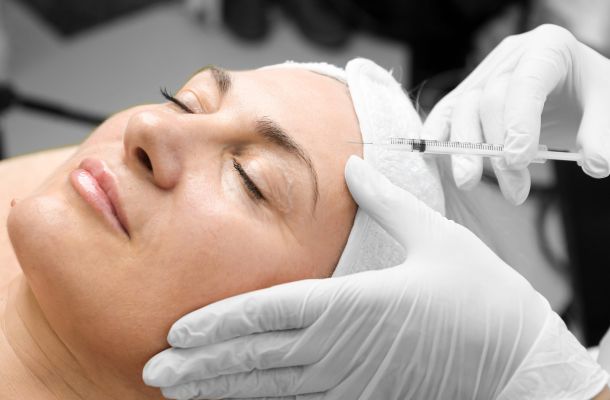
Rather than masking symptoms, regenerative medicine works by reactivating the skin’s own repair mechanisms. Treatments such as PRP, exosomes, biostimulators, and stem cell–based therapies deliver biological signals that stimulate fibroblasts, restore collagen production, improve blood flow, and rebuild the skin’s underlying structure. In other words, they help restore the same systems that ageing and hormonal change have disrupted.

Several regenerative treatments can be used to restore the skin’s functions after menopause.
If menopause fast-tracks the decline of underlying skin function, stem cell therapy does the opposite, with long-lasting regenerative effects.
Topical products might claim to be elixirs of eternal youth, but the real one is already inside your body. Stem cells have an amazing ability to renew themselves and encourage surrounding cells to self-repair. When injected into the face, they improve many of the processes that decline during menopause. They lead to a boost in collagen and elastin production, rebuild fat pads, and reactivate tissue repair.
A fear that many have about cosmetic procedures is that they lead to an unnatural look, where people can tell you have had work done. Stem cell treatments don’t have this risk, as they lead to gradual improvements that allow your tissue to naturally regenerate and regain its youthful look, rather than taking on a new shape.
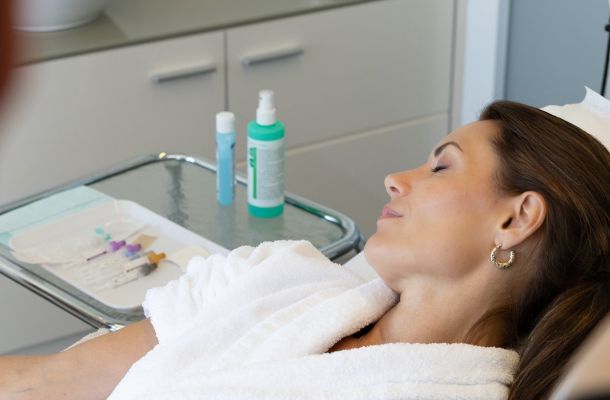
Stem cell treatments are minimally invasive. They require a small surgery to extract stem cells from your fat tissue. This is done under local anaesthesia and requires little to no downtime. The stem cells are then processed and administered using micro-injections, which may cause mild swelling or redness that disappears after a few days. There is very little inconvenience or discomfort, especially considering how profound and long-lasting the effects are.
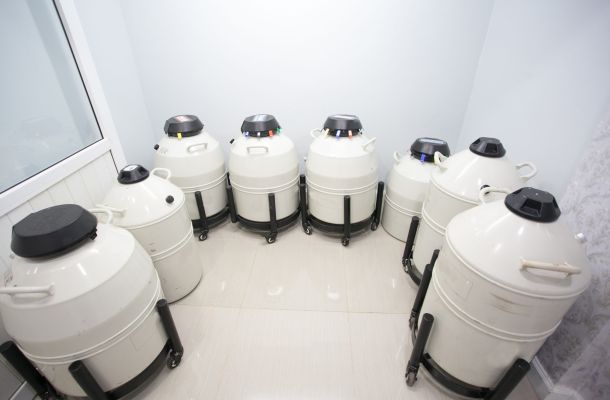
Unlike most cosmetic treatments, stem cell therapy has results that last for years or even decades. After the initial extraction phase, you can choose to store stem cells for future use, which makes the process even easier. If you want to repeat stem cell injections after a few years, your banked cells can be used, and you just need to undergo a quick injection.
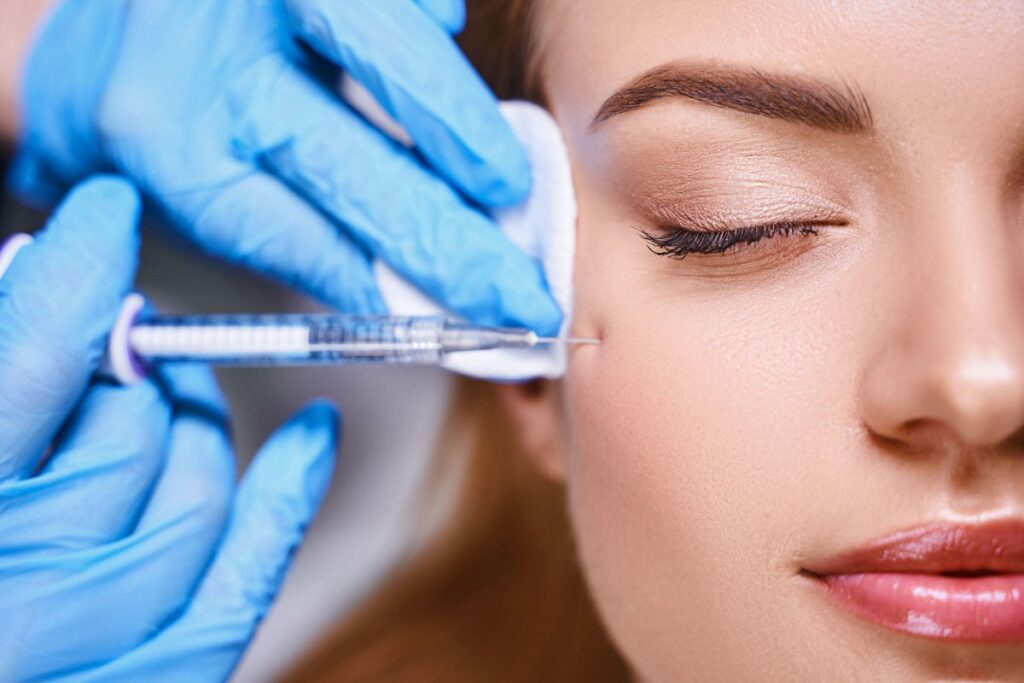
While stem cell treatments are the clear leader of menopause skin treatments, other regenerative options are also worth considering if your budget or lifestyle don’t allow for stem cell treatments, or if you want to combine procedures for additional effects.
PRP treatments involve extracting your own blood and processing it to give it a high concentration of growth factors. Once injected into the face, these growth factors signal to your skin to start repairing itself. Collagen production and blood flow both get a boost, too. PRP injections can’t replace lost volume, but they do help the skin regain its firmness and its glow.
Polynucleotide injections are sometimes described as “moisturiser in a syringe”. They are a form of high-level skincare, injected into the face to give moisture and firmness. Polynucleotide injections contain purified DNA fragments that act as biostimulators, signalling to fibroblasts to produce more proteins. For a few months, the skin is soft and hydrated, with a radiant glow.
Exosomes are like little parcels, carrying messages and material between cells. When injected into the face, they deliver proteins and growth factors that signal to the skin cells to repair themselves. Exosome injections are particularly good at making dull, cracked skin look radiant again.
| Feature | Topical Skincare (Creams/Serums) | Regenerative Medicine (Stem Cells/Bio-stimulators) |
| Depth of Action | Epidermis (Surface layer) | Dermis & Hypodermis (Deep structural layers) |
| Primary Function | Protection & Hydration | Cellular Repair & Tissue Regeneration |
| Collagen Impact | Minimal/Slow stimulation | Significant/Rapid structural synthesis |
| Results | Short-term/Daily maintenance | Long-lasting/Biological reversal |
Clinique Lemana has decades of experience providing cutting-edge cosmetic procedures that tackle the biological causes of tissue decline, not just the visible symptoms.

Menopause is uncomfortable, with its night flushes, mood swings, and brain fog. Not to mention the anxiety that can be caused by this major life shift, and the changes in appearance that come with it. You need self-care, rather than another clinical visit, and treatment at Clinique Lémana feels like a luxury retreat, taking place in our five-star resort in a beautiful natural setting overlooking Lake Geneva.
Our team specializes in regenerative aesthetic medicine. Every procedure is performed in medical-grade settings, using evidence-based protocols. We tailor each program to the person’s needs, preferences, and medical history, while operating within Switzerland’s strict regulations, designed to keep patients safe and healthy.
Clinique Lémana also offers stem cell banking for up to 30 years. After your initial stem cell extraction, you have the choice of preserving your cells so that you can use them for future treatments. This allows you to preserve your cells at a younger biological age and makes future procedures even more straightforward.