Stem Cell Facelift vs Traditional Facelift: What to Expect
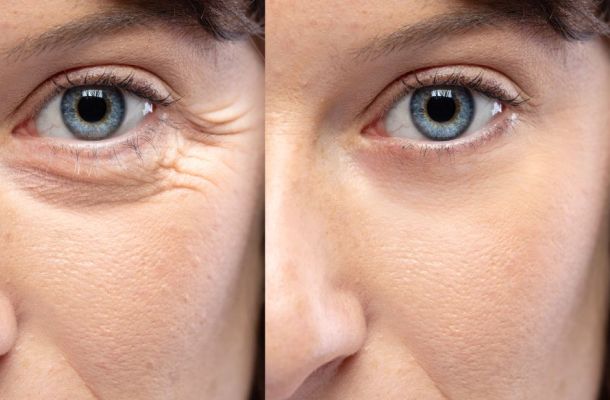
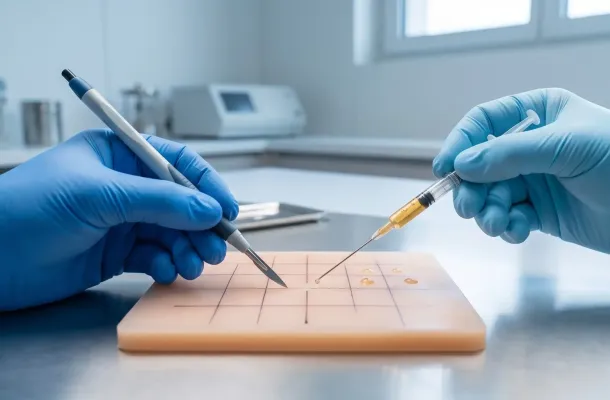
Stem cell facial therapies are sometimes referred to as stem cell facelifts, even though they don’t physically “lift” any tissue at all. The regener…




You almost certainly know someone who seems to have cheated time. You’ve been to their sixtieth birthday party and wondered why their skin, energy, and fitness were that of someone fifteen years younger. Or maybe it’s the opposite, and you know someone who is worn down well beyond their years.
Our age on paper is often used as shorthand for how healthy we are likely to be, but it isn’t very accurate. Rather than our chronological age, it often helps to consider our biological age, meaning how old our body actually is at a cellular level. This is a much better predictor of how long and how well we live.
While it isn’t as easy to measure as checking someone’s date of birth, there are now several ways of testing biological age, and to work out what is driving aging, so you can stay healthy for as long as possible.
Your chronological age is simply the time since you were born. It moves forward in the same way for everyone, and tells you little about the state of your body.
Your biological age is different. It’s an estimate of how old your body actually is at the cellular and molecular level, how much wear your tissues have accumulated, how well your systems are functioning, and how fast you’re ageing compared with the calendar.
Chronological age matters, since it is still the single biggest risk factor for many serious diseases, including cancer, cardiovascular disease, and dementia.
However, it also has its limits, because it treats everyone of the same age as though they carry the same health risks, and they plainly don’t. In terms of cellular aging, there are huge differences between two people born on the same day, because genetics, lifestyle, environment, and stress all leave their marks in different ways.
This is where biological age comes in, and why it has become such an active area of research. Once you’re comparing individuals rather than populations, biological age measures track health outcomes more closely than the birth date does.
People whose biological age runs ahead of their chronological age face a higher risk of cancer, cardiovascular disease, diabetes, dementia, and earlier death, even after accounting for the obvious confounders like smoking. So if you want to know how much time and health you personally have ahead of you, your date of birth is only half the story.
When researchers consider biological age, what they are actually interested in is its difference from chronological age, often called the age gap or age acceleration.
A biological age lower than your chronological age means you’re ageing more slowly than the calendar; a higher one means you’re ageing faster. That gap is what predicts risk.
The interesting thing is that it is dynamic, varying between individuals and even within a single person’s lifespan. Your birth date only ever moves in one direction, but your age gap can widen or narrow over time. It is something you can measure, act on, and measure again to see whether what you’re doing is working.
There is a lot of debate around how best to measure cellular ageing. Before paying for a test, it is worth understanding what the main approaches are.

The most popular approach measures something called DNA methylation. Throughout your life, small chemical tags (called methyl groups) attach to your DNA and switch genes on or off.
The pattern of these tags changes as your cells age, and your body accumulates damage. By reading the pattern at hundreds of specific sites, an algorithm known as an epigenetic clock can estimate your age from a blood, saliva, or cheek-swab sample.
The first epigenetic clocks, developed by Steve Horvath and others around 2013, could predict chronological age from blood with an average error of only a few years. Newer clocks go even further. They work out your biological age and your pace of ageing. GrimAge, for example, is designed to predict mortality risk, while DunedinPACE measures how fast you’re ageing.
These newer clocks tend to track health outcomes better and are also more reliable when you retest, which matters if you want to track change over time.
A more accessible approach builds a biological age estimate from a standard blood panel. Tests of this kind, such as PhenoAge, which is the best known, combine familiar clinical markers such as inflammation (CRP), blood glucose, and albumin into a single figure.
The appeal here is practicality.
These are markers that many people already get measured at routine check-ups. The test is cheaper than epigenetic sequencing, and the inputs are ones a doctor can interpret and act on directly. The trade-off is that it’s a somewhat coarser measure than a well-validated epigenetic clock, but as a starting point, it’s both meaningful and easy to obtain.
Two other signals come up often.
The first is the length of your telomeres, which are the protective caps on the ends of your chromosomes that shorten each time a cell divides. Short telomeres are associated with cellular ageing, but as a personal test, the measure is noisy, and research suggests epigenetic clocks explain considerably more about your age than telomere length does. It’s best treated as one supporting signal rather than a conclusive one.
The second is functional testing: simple physical measures like grip strength, walking speed, and VO2 max (a measure of cardiovascular fitness). These don’t require a laboratory, and they correlate genuinely well with how well you’re ageing. They can’t pinpoint a molecular age on their own, but as a real-world check on how your body is actually performing, they’re representative.
| Test type | Sample needed | What it measures | Precision |
| Epigenetic clock (e.g. Horvath, GrimAge, DunedinPACE) | Blood, saliva or cheek swab | DNA methylation patterns at ageing-associated sites | High, often within 2 to 4 years |
| Blood biomarker / phenotypic age | Standard blood draw | Clinical markers like CRP, glucose, albumin | Moderate, more accessible |
| Telomere length | Blood sample | Length of protective chromosome caps | Lower, used as a complementary signal |
| Functional markers | Physical assessment | Grip strength, VO2 max, gait speed | Indicative, not diagnostic on its own |

As with any wellness hype, it is worth examining the science, so that you can distinguish between clever marketing and actual fact.
When it comes to biological ageing, the underlying science is real. Epigenetic clocks are used across thousands of peer-reviewed studies, and the link between age acceleration and disease risk is well established.
But there are limits. These tests are still considered research tools rather than approved diagnostics. There’s no regulatory clearance for using a single person’s result to make a medical decision, and no agreed “normal range” the way there is for cholesterol.
Most clocks were also trained largely on people of European ancestry, so accuracy can drop in other groups. And a single reading can be nudged by something as ordinary as a recent illness or a bad night’s sleep.
In short, a biological age result is a useful signal, but not a definitive verdict on your health. Its real value shows up when it’s interpreted by a clinician and when it’s tracked over time.
The ability to measure biological age is exciting because it allows us to put numbers on the impact of various lifestyle factors on aging. So here’s what the research says genuinely works.
Physical activity is the lifestyle factor with the biggest evidence behind it when it comes to lowering biological age.
Studies show that people who are more physically active have consistently lower biological age across a range of epigenetic clocks. The effect appears dose-dependent, meaning that more activity correlates with slower ageing, and it holds across large, diverse populations.
There’s even some early evidence that exercise can turn the clock back, not just slow it: in one study, sedentary middle-aged women lowered their epigenetic age by around two years after just eight weeks of combined aerobic and strength training.
Another intervention with strong backing is calorie restriction.
A randomised controlled trial of long-term calorie restriction in healthy, non-obese adults showed a measurable slowing in their pace of ageing on the DunedinPACE clock of around 2 to 3%.
However, there are caveats. The effect showed up on the pace-of-ageing clock but not on two others tested. Plus, sustained calorie restriction is hard and isn’t for everyone. It should always be conducted under medical supervision.
Beyond how much you eat, what you eat matters.
Diets rich in whole foods that are packed with micronutrients and lower inflammation are linked to slower epigenetic ageing, and specific nutrient deficiencies have been linked to a faster pace of ageing in their own right.
Chronic poor sleep and sustained psychological stress both push biological age markers in the wrong direction, possibly through their effects on inflammation and immune function.
For every intervention with evidence, there are several sold well ahead of it.
Many supplements marketed as “reversing” biological age have little or no controlled human data behind them, and a compound slowing ageing in a mouse or a petri dish is a long way from doing so safely in a person.
A specific caution: because a biological age result is easy to influence temporarily, it’s also easy to sell against. Be wary of any product promising a dramatic drop, especially when the “proof” is a single retest taken soon after.
The interventions that genuinely work are, frustratingly, the ones you already suspect: exercise, food, sleep, not smoking, applied consistently. That’s less exciting than a pill, but it’s where the evidence actually is.
At Clinique Lémana, we treat biological age as the starting point of a properly structured programme.
Everything begins with an accurate baseline. We use epigenetic testing to establish your true biological age and pace of ageing, interpreted by a physician alongside yo
Stem cell facelifts and traditional facelifts rely on different mechanisms and deliver different results. Here’s what to expect from each.ur full clinical picture rather than handed to you as a bare figure.
Rather than generic supplementation, we tailor nutritional support to your individual profile, correcting the specific deficiencies and imbalances that can accelerate ageing.
Drawing on the evidence around caloric restriction and fasting, we offer structured, medically supervised fasting programmes in the calm of the Lavaux vineyards above Lake Geneva.
Supervision lets you access the metabolic benefits of fasting while remaining safe and comfortable. You’ll have clinical oversight throughout, and be able to rest in an environment designed to make the process restorative rather than gruelling.
Biological age is measured inside the body, but it often shows first on the skin.
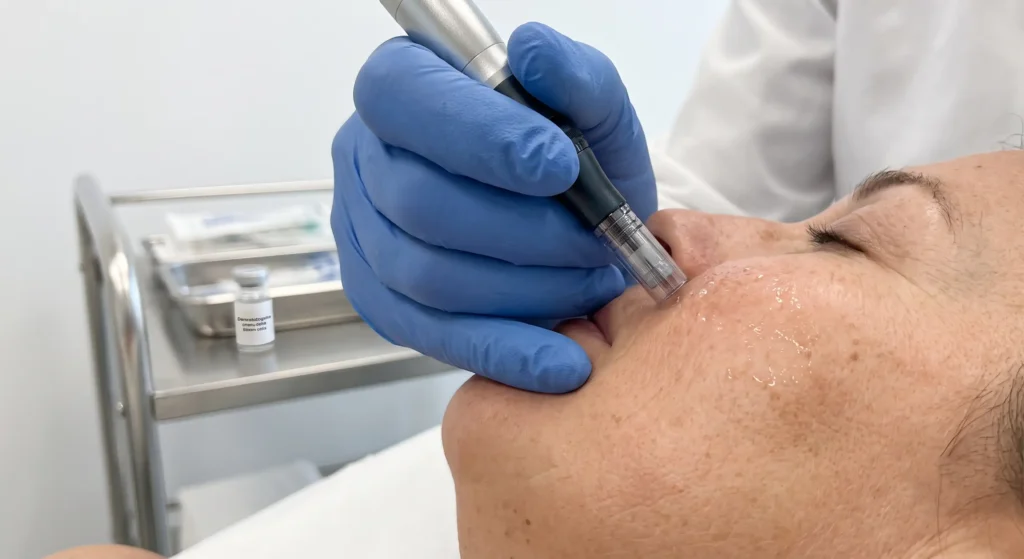
Our regenerative treatments, including stem cell facial rejuvenation using your own cells, work to restore the quality and vitality of your skin from within, making them a visible complement to the internal work of a longevity programme.
The single most important idea here is that your age is not one number but two. The calendar you can’t change. Your biological age, however, you can influence.
Testing gives you a real, if imperfect, read on where you stand, most valuable when it’s interpreted properly and tracked over time rather than treated as a one-off verdict.
And the levers that move it are, encouragingly, mostly the ones already within your control: movement, nutrition, sleep, and structured interventions delivered with proper medical guidance.
Knowing your biological age is only the first step. The point is what you choose to do with it.
Yes, and often substantially. Two people born on the same day can have biological ages a decade or more apart, because genetics, lifestyle, stress, and environment all shape how fast your body ages. Your birth date is fixed; your biological age reflects the actual condition of your cells and systems.
Epigenetic clocks that measure DNA methylation are currently the most precise, especially newer ones like GrimAge and DunedinPACE that track health and pace of ageing rather than just estimating age.
It appears genuinely modifiable, which is the exciting part. Regular exercise, good nutrition, quality sleep, and interventions like medically supervised fasting are all linked to slower biological ageing.
For most people, roughly once a year makes sense. Biological age changes gradually, and retesting too soon risks reading normal fluctuation as real change. An annual measure lets you see whether lifestyle changes are having a meaningful impact.
No. Biological age tests are indicators, not medical diagnoses. There’s no official “normal range” for the age gap between your chronological and biological ages. You should view biological age tests as a signal amongst others, to exam with your doctor in a comprehensive approach.