Senolytics: Are They as Effective as They Claim to Be?
1 July 2026
As you get older, senescent or “zombie cells” build up in your body. They don’t function properly, refuse to die, and emit harmful signals to surrounding tissues. Longevity studies show senescent cells accelerate aging, and finding ways to reduce senescence is a field of much interest. Currently, the most effective way of tackling senescence is to use the class of drugs called senolytics, which selectively eliminate zombie cells.
Research on animals has shown senolytics to produce exciting anti-aging results, linking them to longer lifespans and improved physical function. But are senolytics really the breakthrough they are often presented as? Research in humans is still in its early stages, and many questions remain about how effective these treatments are, who might benefit from them, and whether they can deliver meaningful improvements in healthspan.
In this article, we explore how senolytics work, what the latest research says about their effectiveness, and how they compare with other approaches to healthy aging.
What Are Senescent Cells and Why Do They Matter for How You Age?
When cells stop functioning properly, they are supposed to be removed from the body by a process known as apoptosis, or programmed cell death. However, as we age, this clearance system becomes less effective, and a growing number of senescent cells build up in the body.
The Biology of a Cell that Refuses to Die
Everyday life exposes cells to all kinds of damage: environmental exposure, radiation, mistakes in DNA replication, and stress from converting oxygen into energy all take their toll. Usually, the body has a few ways of dealing with damaged cells: it can repair them, remove them through a process called apoptosis (programmed cell death), or temporarily stop them from dividing.
This third option is what creates a senescent cell. Essentially, the cell puts itself into a permanent state of pause, stopping replication so that damaged cells cannot continue multiplying and potentially contribute to diseases such as cancer.
But senescent cells do not simply disappear or become inactive. They remain alive and metabolically active, releasing harmful substances that affect the behavior of nearby cells.
How Senescent Cells Accumulate and Accelerate the Aging Process
When we are younger, the immune system is very good at spotting senescent cells and clearing them out. But as you age, two things happen: your cells accumulate more damage (from UV rays, pollution, and natural wear and tear), and your immune system slows down. Senescent cells can then begin to accumulate and accelerate the aging process in several ways:
The inflammatory leak (SASP): Senescent cells release a mixture of inflammatory molecules known as the senescence-associated secretory phenotype (SASP). This includes cytokines, growth factors, and enzymes that can disrupt the normal function of surrounding tissues. Over time, these chemical signals can create a more inflammatory environment throughout the body.
The domino effect: The molecules released by senescent cells do not only affect the cells themselves. They can also influence nearby healthy cells, damaging their function and even pushing some of them into senescence. This creates a cycle where damaged cells contribute to the accumulation of even more damaged cells.
Inflammaging: As senescent cells build up and continue sending out inflammatory signals, they contribute to a state of chronic, low-level inflammation known as inflammaging, which is linked to many age-related conditions, including cardiovascular disease, osteoarthritis, and neurodegenerative disorders.
Senescent Cells in the Skin: What This Looks Like in Practice
The skin is one of the most visible places where cellular aging shows up over time. Throughout life, skin cells are constantly exposed to stress from UV radiation, pollution, and other environmental factors, all of which can contribute to the build-up of senescent cells.
Fibroblasts, the cells responsible for producing collagen and elastin, are especially affected. As these cells become senescent, they tend to produce less of the proteins that keep skin firm and elastic, while also releasing inflammatory signals that can influence surrounding tissue.
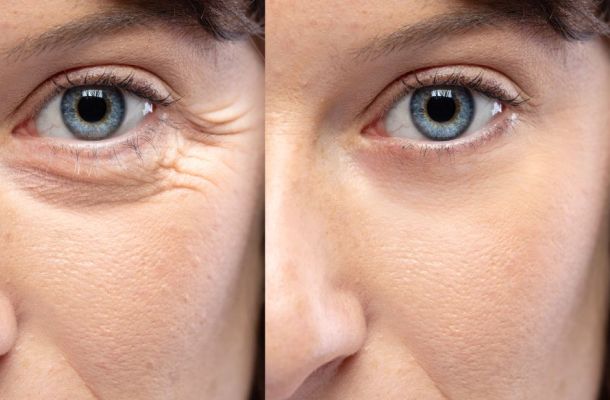
Over time, this shift can contribute to skin aging. The skin is slower to heal when wounded, has less elasticity, and wrinkles and age spots appear.
Because of this visible link, the skin has become a major focus in senolytic and anti-aging research. Some skincare products and aesthetic treatments now claim to target cellular senescence directly, although the evidence supporting many topical “senolytic” cosmetics is still limited.
What Are Senolytics and How Do They Work?
Senolytics are a class of compounds that selectively eliminate senescent cells, preventing them from building up and contributing to age-related decline. They work by targeting the survival pathways these cells rely on, known as senescent cell anti-apoptotic pathways (SCAPs), which normally help them resist programmed cell death.
By disrupting these signals, senolytics lower the cells’ defenses and make them vulnerable again to apoptosis. This leads zombie cells to die a natural death rather than lingering on.
Senolytics vs. Senomorphics: Two Different Strategies
While senolytics focus on removing senescent cells, another approach aims to change their behavior rather than destroy them. These treatments are known as senomorphics (also called senostatics).
Most senomorphic approaches focus on reducing the senescence-associated secretory phenotype (SASP), the inflammatory signals these cells release that can damage surrounding tissue. The distinction matters because senescent cells are not always harmful. In some contexts, they play useful roles in processes like wound healing and tissue repair. Completely removing them could therefore have unintended effects.
For this reason, researchers are still debating whether it is better to clear senescent cells, calm their activity, or combine both approaches depending on the situation.
The Main Senolytic Compounds and What They Target
Several compounds have been identified as potential senolytics, although most are still being researched and are not yet approved as general anti-aging treatments. Different compounds target different survival mechanisms used by senescent cells.
Compound
Source / Type
Primary mechanism
Evidence status
Key consideration
Dasatinib + Quercetin (D+Q)
Prescription drug + plant flavonoid
Blocks multiple SCAP pathways; most effective in combination
Most studied; multiple Phase 1–2 clinical trials completed
Dasatinib requires medical supervision; side effect profile needs monitoring
Fisetin
Flavonoid (strawberries, apples)
Triggers apoptosis in senescent cells; activates sirtuins
Strong preclinical; emerging human skin data (2024)
Good safety profile; available as supplement but doses in studies are high
Navitoclax (ABT-263)
BCL-2 inhibitor (oncology-derived)
Potent senolytic via BCL-2 family inhibition
Preclinical; not approved for anti-aging use
Significant hematologic risks (thrombocytopenia); not suitable for general use
Small clinical trials showing improved skin appearance and elasticity
Systemic use has immunosuppressive risks; topical data more encouraging
Quercetin alone
Flavonoid (onions, berries)
BCL-2 inhibition; anti-inflammatory
Well-studied in combination with Dasatinib; moderate standalone data
Widely available supplement; milder senolytic effect than D+Q combination
What Does the Clinical Evidence Actually Show?
The concept behind senolytic therapy is logical and well-established: if we remove the zombie cells driving chronic inflammation, we can theoretically slow down the aging clock. But while the theory makes perfect sense on paper, it hasn’t yet been perfectly translated into a clinical reality.
The Preclinical Case: Strong, Consistent, but Mostly in Mice
Animal studies have had impressive results, showing that eliminating senescent cells slows the aging process considerably. For instance, a famous 2016 study published in Nature demonstrated that naturally clearing these cells extended the lifespan of mice by up to 25% while preserving youthful tissue function.
Further research in Nature proved that transplanting even a small number of zombie cells into young mice caused rapid physical frailty, while administering the senolytic cocktail Dasatinib and Quercetin (D+Q) reversed the damage and restored physical function.
Across dozens of animal trials, senolytics have successfully treated many age-related conditions, including osteoarthritis and cardiovascular decline. The data in mice is positive and highly encouraging; however, human biology is more complex than that of rodents. Translating these results to our bodies is proving to be a much greater challenge.
Human Clinical Trials: Promising Signals, Incomplete Translation
As research transitions into human subjects, the success of senolytics becomes much more nuanced. Early pilot studies provided critical proof of concept; for example, a landmark trial published in EBioMedicine confirmed for the first time that oral senolytics could successfully reduce senescent cell abundance in human tissue.
However, larger trials have delivered sobering reality checks. A notable Phase 2 trial in Nature Medicine investigated the effects of intermittent senolytic therapy on bone metabolism in older women. Despite the success of similar treatments in mice, the human results showed only small and temporary benefits to bone formation and no overall difference in bone degradation.
For now, the transition from successful therapies in animals to successful therapies in humans is incomplete. Researchers have therefore urged caution.
The “Personalized Burden” Insight: Why Blanket Senolytics May Not Make Sense
One of the biggest lessons emerging from senolytic research is that aging is not the same for everyone. Two people of the same chronological age may have very different levels of senescent cell burden depending on genetics, lifestyle, disease history, and environmental exposures. This suggests that a blanket approach of prescribing senolytic drugs based on age may not be the most effective strategy.
Instead, future senolytic therapies may need to become more personalized. Researchers are investigating ways to identify people with higher levels of harmful senescent cells and determine which tissues are affected, and which senolytics would be the most effective.
Where the Hype Outstrips the Science: and How to Tell the Difference
While human clinical trials are still in their early days, public hype and the wellness industry have moved faster than the actual science. Many supplements and cosmetics are being marketed as senolytic therapy, but you should be wary before investing your time and money into treatments that are, as yet, unproven.
The Supplement Industry Problem
The same excitement driving senolytic research in the lab has spilled over into the wellness industry, and you can now find dozens of over-the-counter capsules marketing themselves as “senolytic”. Most contain the naturally occurring senolytic compounds quercetin and fisetin.
Since supplements aren’t regulated as drugs, there is no guarantee that these products have any actual effect. They might not contain the active ingredients in any meaningful amount, and even if they do, without clinical studies to prove it, they may not be reaching the right parts of your body to target senescent cells.
There is also a safety dimension to consider. Researchers into senolytic therapy note that there is the potential for senolytics to cause real harm if used incorrectly, as they could interact with other medications or prevent the positive effects of senescence, like limiting the growth of cancers.
The “Senolytic Skincare” Problem
In skincare, too, senolytic has become a marketing buzzword. Many brands are selling products promising senescence-busting ingredients in their formulations. The supporting evidence is mainly preclinical studies. The included ingredients may have shown senolytic activity in the lab, and one promising study showed that topical application of ABT-263 reduced senescence markers in the skin of aged mice, but that involved a carefully administered lab compound, not a commercial serum. Meanwhile, human evidence remains basically nonexistent.
What a Scientifically Credible Senolytic Protocol Actually Looks Like
A scientifically credible approach to senolytics looks very different from the anti-aging promises made by the wellness and cosmetic industries. It starts by acknowledging that senolytics remain an emerging area of research, with many open questions still unresolved, which is why senolytics shouldn’t be prescribed or used outside the context of carefully monitored clinical trials.
Science-backed protocols don’t call for daily supplements or daily topical use, because most senolytic researchers favor an intermittent, “hit-and-run” approach over continuous exposure. A short dose is enough to disable the survival mechanisms, the SCAPs, that normally protect senescent cells from their own toxic signaling; once that defense is down, the cells undergo apoptosis over the following days.
Clinical trials generally administer short courses of senolytics over two or three days, repeated every few weeks. Meanwhile, doctors closely monitor liver, kidney, and platelet function.
Combining Senolytics With Proven Cellular Anti-Aging Medicine
Research suggests that clearing senescent cells can make other regenerative treatments, like stem cell therapy, exosomes, and PRP, more effective by changing the environment in which those treatments are working. As is often the case in longevity medicine, a combined approach appears to be the most effective way forward.
The “Cellular Reset” Concept: Senolytics as Preparation, Not Destination
One use case for senolytics is to clear out the cellular environment, laying the groundwork for regenerative treatments. Senescent cells create a hostile microenvironment for everything around them, since they release chemical signals that suppress normal cell function. Clearing senescent cells first removes much of that interference, giving any regenerative treatment that follows a cleaner environment to work in.
How Senolytics Complement Exosomes, Stem Cell Therapy, and PRP
The clearest evidence for this combination comes from stem cell biology. Senescent cells in a stem cell’s area can suppress that stem cell’s ability to self-renew and differentiate, largely because SASP-driven inflammation interferes with the signals stem cells rely on. Removing those senescent cells has restored some of this lost activity in animal models.
Who Is a Good Candidate for Senolytic Therapy, and Who Is Not?
Everyone’s senescent burden increases as they age, but that doesn’t mean that everyone would benefit from senolytic therapy. Some people carry a heavier load of senescent cells than others, and some have characteristics that make these drugs riskier.
Signs that your senescent cell burden may be elevated
Lifestyle and environmental exposures matter too: factors like smoking, UV exposure, and chronic inflammation all contribute to cellular damage. Someone who is older, carries excess weight, has a chronic inflammatory condition, or has had significant environmental exposure is statistically more likely to have an elevated burden, though only emerging clinical biomarkers can confirm this directly.
Who Should Approach Senolytics With Caution or Medical Supervision?
Senolytics are not suitable for everyone, and some people should be especially cautious. Because the short and long-term side effects of these therapies in humans are still largely unknown, anyone considering them outside a clinical trial should do so under medical supervision. This is particularly important for people taking other medications, since senolytic compounds can interact with them or alter how the body processes them.
The Honest Verdict: Senolytics Are Genuinely Promising But Not Yet Complete
Senolytics are one of the most promising ideas in longevity science, but not yet a finished one. The underlying biology is sound, and the animal studies are genuinely impressive, but promising is not the same as proven. Human results so far have been mixed, with some trials showing only small or temporary benefits, and the big questions, such as who benefits most, at what dose, with what long-term effects, remain largely unanswered.
The science is moving quickly, and senolytics may well become a meaningful part of how we age in the future. For now, though, the most credible place to encounter them is a carefully monitored clinical trial, not a supplement bottle or a jar of serum. Treat the current hype with healthy skepticism, and keep an eye on the research as it matures.
Our Advanced Anti-Aging Cellular Treatments at Clinique Lemana
Since 1952, Clinique Lemana has been at the cutting edge of longevity medicine.
Regenerative Therapies for Skin and Cellular Health
Our regenerative treatments work with your body’s own repair mechanisms to support healthier, more resilient tissue. These therapies are most effective when the cellular environment is primed to receive them.
Stem cell-based skin rejuvenation uses the regenerative potential of stem cells to support skin renewal, elasticity, and tone from within.
Exosome therapies deliver concentrated signaling molecules that help guide tissue repair and reduce inflammation at the cellular level.
PRP regenerative treatments use your own platelet-rich plasma to stimulate healing, collagen production, and tissue regeneration.
Longevity Retreats Focused on Cellular Rejuvenation
For those who want to go beyond individual treatments, our longevity retreats combine cellular rejuvenation with a holistic reset of body and mind in one of the most peaceful settings in Europe.
Personalized anti-aging programs built around a complete medical check-up and epigenetic assessment, so every protocol is matched to your individual biology and lifestyle.
Medical detox and fasting protocols, including supervised therapeutic fasting and nutritional detox, designed to give your cells a genuine rest and support their optimal function.
Preventive longevity medicine that focuses on identifying and addressing the drivers of premature aging before they become problems, rather than waiting to treat decline after the fact.
Stem Cell Banking Up to 30 Years
Your cells will never be younger than they are today. Stem cell banking lets you preserve that biological advantage for the future, when regenerative medicine will likely be far more advanced than it is now.
Clinique Lemana offers stem cell banking of up to 30 years, giving you a stored reserve of your own younger cells to draw on as therapies continue to evolve.
Get ahead of research and regulations by banking now, so you’re positioned to benefit from future breakthroughs the moment they become available, rather than starting from scratch later in life.
To find out which treatments might suit you, our advisors can talk you through a personalized program and the next steps.
FAQ: Senolytics and Anti-Aging
Can I just take quercetin or fisetin supplements and get the benefits?
There is currently no strong human evidence that the use of over-the-counter supplements marketed as senolytics, such as quercetin and fisetin, significantly reduces senescent cells or produces measurable anti-aging effects.
Are senolytics safe? What are the risks?
Since research is still in its early stages, most experts advise using senolytics only within clinical studies or supervised medical settings. Potential risks include unintended effects on healthy cells, disruption of the beneficial roles some senescent cells play, drug interactions, and unknown long-term effects from repeated use.
How is senolytic therapy different from stem cell therapy or exosomes?
Senolytic therapy focuses on removing dysfunctional senescent cells that contribute to inflammation and aging. Stem cell therapy aims to regenerate tissues by introducing or stimulating new cells. Exosome therapy uses cell-derived signaling molecules to influence repair and communication.
Will senolytics actually make me look younger?
There is currently no strong clinical evidence that senolytics produce visible anti-aging or cosmetic effects in humans. The theory is that reducing senescent cells could improve tissue function, including skin quality, by lowering inflammation. However, these outcomes remain speculative, and more research is needed.
How do I know if my senescent cell burden is high enough to benefit from treatment?
At present, there is no widely available or validated clinical test to measure total senescent cell burden in the body. Researchers use experimental biomarkers, but these are not standard in routine healthcare.
Are senolytics FDA-approved for anti-aging?
No. There are currently no senolytic therapies approved by the FDA or European regulators for anti-aging or longevity use. Some drugs studied as senolytics are approved for other medical conditions, but their use in aging-related treatment remains experimental.